Showing posts with label alcohol stove. Show all posts

Monday, November 28, 2016

Coffeeneuring ride 7: #coffeeoutside on the Glacial Drumlin Trail

For what could have been the final ride to complete this year's coffeeneuring challenge, I decided to get in an instance of #coffeeoutside, that is make my own coffee somewhere in the outdoors. As my wrist continued to feel better, a longer ride seemed in order, and I headed toward Lake Mills, about 50 kilometers (30 miles) west of Madison.
Patching my spare tube, after the flat on the previous ride
 A large proportion of the ride is on the Glacial Drumlin Trail, but first you have to ride some nice-ish country roads to the trailhead in Cottage Grove. Eventually the trail will be extended all the way into Madison, but that will still be a few years.


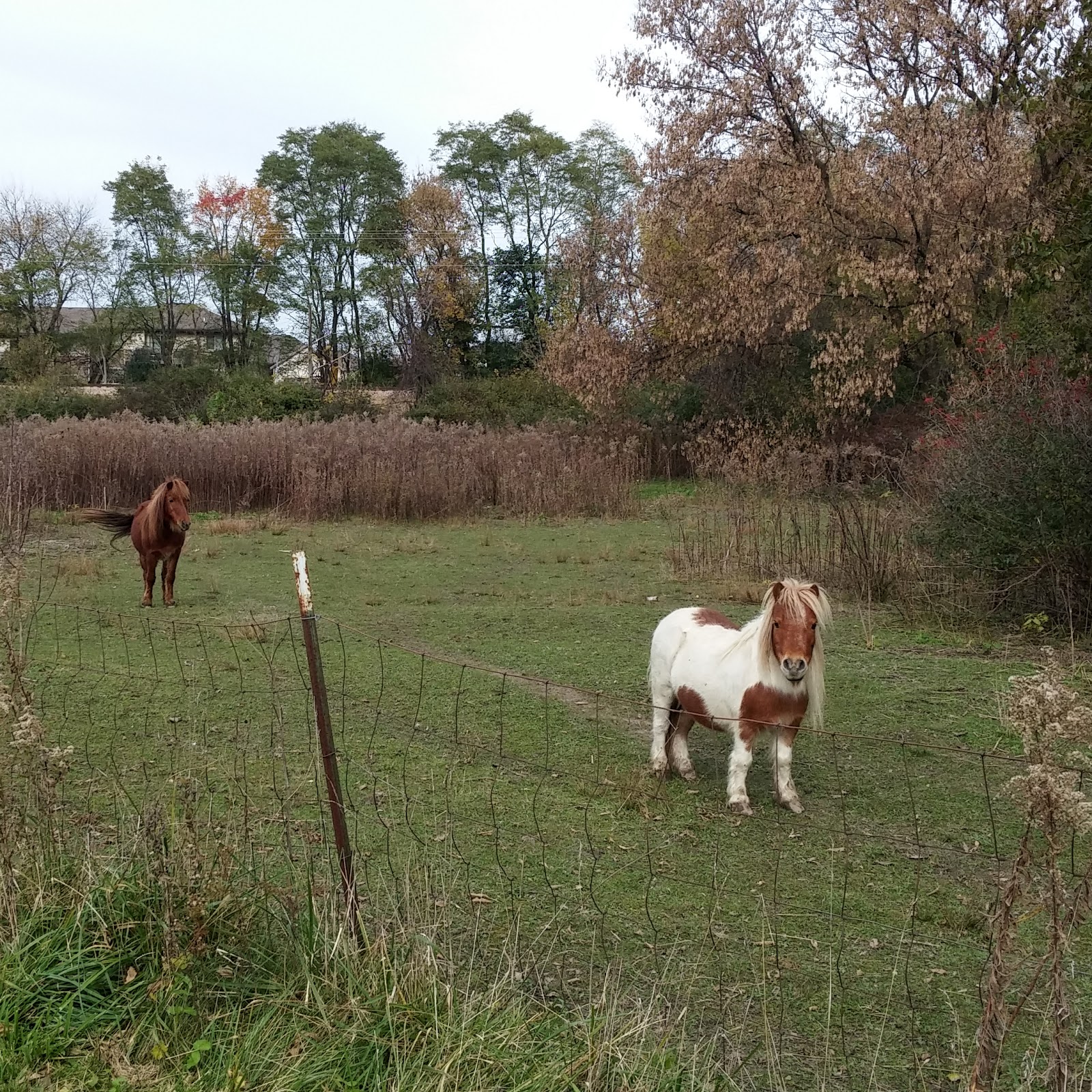
Mini horses near Cottage Grove

On the trail
It had been raining a lot over the past week. I had read reports of other bike trails around Madison being very soggy or even flooded. But the Glacial Drumlin turned out to be in fine condition.
Koshkonong Creek had high waters
 Shortly before reaching Lake Mills, I passed two cyclists with camping gear, maybe headed to the Sand Hill Station campground, where the SO and had done an S24O earlier in the season.
Rock Lake
The plan was to first ride to the Tyranena Brewing tasting room, have a beer, and then make my coffee on the way back to Madison.
Warm enough to sit outside at Tyranena...
On the way to Lake Mills I had kept my eyes open for good coffee spots and decided on a bench with a pretty view of wetlands. Thousands of birds provided a wonderful soundtrack to complement the gurgling of my Bialetti Moka Express. Even the coffee itself was bike themed: Just Coffee Co-op had given out sampler packs of their Revolution Roast at a cyclocross race. The coffee is named for Revolution Cycles, a great local coffee shop. And while the coffee itself is a little too dark for my liking, it made a good fit for this #coffeeoutside adventure. As a side note, The Bialetti works great as an outdoor coffee maker. It happens to fit perfectly into the pot stand I made ages ago out of a illy coffee can, and with a capillary hoop alcohol stove it will make coffee pretty quickly. The coffeemaker is certainly not the lightest, but for coffee-centered trips where weight is not the highest priority, I really like this combination.


The days have gotten shorter

Almost back home
This was a wonderful ride to complete the coffeeneuring challenge, and I'm really glad I participated in the challenge this year. We had an uncharacteristically warm fall this year, but still there were days where maybe I wouldn't have gone out hadn't it been for the challenge. And it also encouraged me to seek out some new coffee destinations in an around Madison. I did a few more coffeeneuring rides in the meantime and may blog about them. But the submission deadline for the challenge is just around the corner, and so I had to write up my official entries first! See you again next year, and always be coffeeneuring!

Sunday, March 30, 2014

Soda can stove extravaganza – Capillary Hoop Stove

I'm a big fan of DIY alcohol stoves. They're cheap, lightweight, efficient, and not terribly difficult to make. Until now I've used different iterations of Mark Jurey's Penny Stove. It's based on an air intake loosely covered by the penny in the middle and six jets on the outside. Alcohol poured into the middle primes the stove and once that has been used up the stove draws air through the center and starts the jet burn.

Old version of the penny stove, using the no longer available Heineken cans
In a discussion about coffee-making setups, someone mentioned a Japanese maker of a different type of soda can stove, the “capillary hoop stove.”


I spent a lot of time watching tetkoba's videos, and the both the design and the craftsmanship are amazing. By virtue of the capillary force, the jet burn starts almost immediately, and amazingly the stove stays cool to the touch. Today I bought a sixpack of V8 cans of the right size and will try to build a CHS myself. To be continued!

Monday, February 6, 2012

Testing a Penny Stove in the Cold

I am a big fan of DIY alcohol stoves, especially the penny stove variety. I like DIYing in general, and in this case it's also about the fact that a homemade penny stove is actually better than many if not most of the commercial offerings in terms of weight and heat output.
Heineken Penny Stove and stand


In a recent thread on the German Radreise-Forum about equipment choices for an overland trip from Germany to China, the question of the ideal stove came up. Alcohol stoves were discounted by some, based on the availability of fuel in many countries along the way and due to their questionable performance at high altitudes and low temperatures. I was somewhat surprised by the latter objections, as on the penny stove website there are a number of testimonial about the cold weather performance of the stove, including a quotation by Reinhold Messner who supposedly made tea with a jet-based alcohol stove on one of his expeditions to the Himalayas. However, the information there was not very specific -- how much longer does it take to boil water at cold temperatures and how much more fuel does it take -- and my curiosity was sparked. I decided to test it myself.

Air temperature of -9°C
Stove, pot, windscreen
This winter has been pretty mild in Montreal and so it took some time until it was cold enough for a meaningful test. Last Sunday morning had been predicted to be about -10°C and so I put my stove, fuel, and thermometer out on the porch right after waking up and ran the test after about an hour. So this is the experimental setup:

Altitude: 10m
Amount of water: 1l
Air temperature: -9°C
Water temperature at start: 5°C
Pot: 2.2l REI coated aluminium pot with slightly to big stainless steel lid (I couldn't find the original plastic lid)
Stove: Heineken-based penny stove with wind screen
Wind: almost no wind
Fuel temperature: same as air temperature


Burner at full power
I started the timer right before lighting the stove. The lighting itself was unproblematic: I just dropped a burning match into the stove. The total time until reaching a full boil was about 14 minutes and 30 seconds. I didn't measure the fuel consumption, as my kitchen scale recently broke, but the stove still had quite a bit of fuel in it.


5°C water right from the tap

Now what's the bottom line? Is the penny stove an appropriate choice for winter camping or riding through the Himalayas? I don't think you can definitely answer that question based on my test. Unfortunately, I don't own any other types of stoves and therefore couldn't do replications of the test on other equipment. But there are some hints: first of all, the stove does work in the cold. Even if it may not be the fastest, it will still boil your water in a not totally unreasonable amount of time. Second, we can compare the stove's cold weather performance with some of the published data at higher temperatures: in this test, a penny stove boiled 32 oz (0.95 l) of water in 7:50 at 20° degree air temp with 18°C degree water temp and 670m elevation. It would be interesting to calculate the estimated burn time adjusted for the different starting temperatures of the water, but I haven't done that yet.

Full boil
Assuming that it will get colder again here at some point, I'll try to repeat the test at something closer to -20°C and I might also do a test indoors to get a good baseline to compare my results to. If any readers can contribute data on the cold weather performance of alcohol or other stoves, please feel free to comment.